


As electric vehicles (EVs) continue to gain momentum in Saudi Arabia, one of the most common questions drivers ask is: “How do I charge my car, and which type of charger is best for me?” The answer is not one-size-fits-all—it depends on a few key factors:
- Charging speed – how quickly you need your car ready.
- Vehicle compatibility – ensuring the charger matches your EV model.
- Cost – the difference between affordable home charging and higher-priced public stations.
- Convenience – whether you prefer charging overnight at home or on the go.
In this article, we’ll break down the main types of EV chargers—Level 1, Level 2, and DC Fast Charging—explaining their features, how long each one takes, and the situations where they make the most sense.
✨ By the end, you’ll know exactly which charger fits your lifestyle—whether you’re commuting daily in Riyadh, taking longer highway trips across the Kingdom, or simply looking for the most cost-effective solution.
Why Are Charging Stations Essential for EV Adoption?
Charging stations are more than just an add-on to the electric vehicle ecosystem—they are the backbone of EV adoption. Their importance can be seen on multiple levels:
🚘 Driver Convenience & Confidence
A reliable charging network ensures that drivers can recharge their vehicles whenever needed, eliminating range anxiety—the fear of running out of battery mid-journey. This convenience is crucial for encouraging more people to make the switch from fuel-powered cars.
Charging Speed & Usability
The speed of charging directly impacts the practicality of EV ownership. Fast-charging stations, for example, can power up a vehicle in under 40 minutes, making long-distance travel across Saudi highways more feasible. Without such infrastructure, EVs risk being seen as impractical for everyday use.
National Infrastructure & Adoption
For Saudi Arabia, building a well-developed charging network is central to achieving the goals of Vision 2030. Expanding public and private charging stations not only accelerates EV adoption but also supports sustainability initiatives, reduces dependence on fossil fuels, and enhances the Kingdom’s role as a global leader in clean energy.
Broader Impact
Beyond individual convenience, charging infrastructure plays a vital role in:
- Supporting economic growth by enabling EV-related industries.
- Reducing urban air pollution through increased EV adoption.
- Encouraging innovation, such as smart grids and renewable-powered charging hubs.
✨ In short, charging stations are the gateway to mainstream EV adoption. Without them, the transition would stall; with them, Saudi Arabia can build a cleaner, smarter, and more sustainable transportation future.
Level 1 Charging (AC – Standard Home Outlet) ⚡
Level 1 charging is the most basic and widely accessible method of powering an electric vehicle. It uses a regular household outlet (120V in North America, 220–240V in Saudi Arabia and Europe), requiring no special installation.
- Charging Speed: Typically delivers around 2–3 kW of power, which translates to 8–10 kilometers of range per hour of charging. A full charge can take 12–24 hours, depending on the size of the battery.
- Best Use Cases: Level 1 charging is ideal for light daily driving, such as short commutes within cities like Riyadh or Jeddah, where the average daily distance is limited.
- Advantages:
- Lowest-cost option—no need for extra hardware.
- Easy and convenient for overnight charging.
- Lowest-cost option—no need for extra hardware.
- Limitations:
- Not practical for long-distance driving.
- Significantly slower compared to Level 2 or DC fast chargers.
- Not practical for long-distance driving.
✨ In short, Level 1 charging is best for beginners or city drivers who travel short distances and can leave their EV plugged in overnight. For drivers who need faster turnaround times or longer trips, upgrading to Level 2 or DC Fast Charging becomes essential.
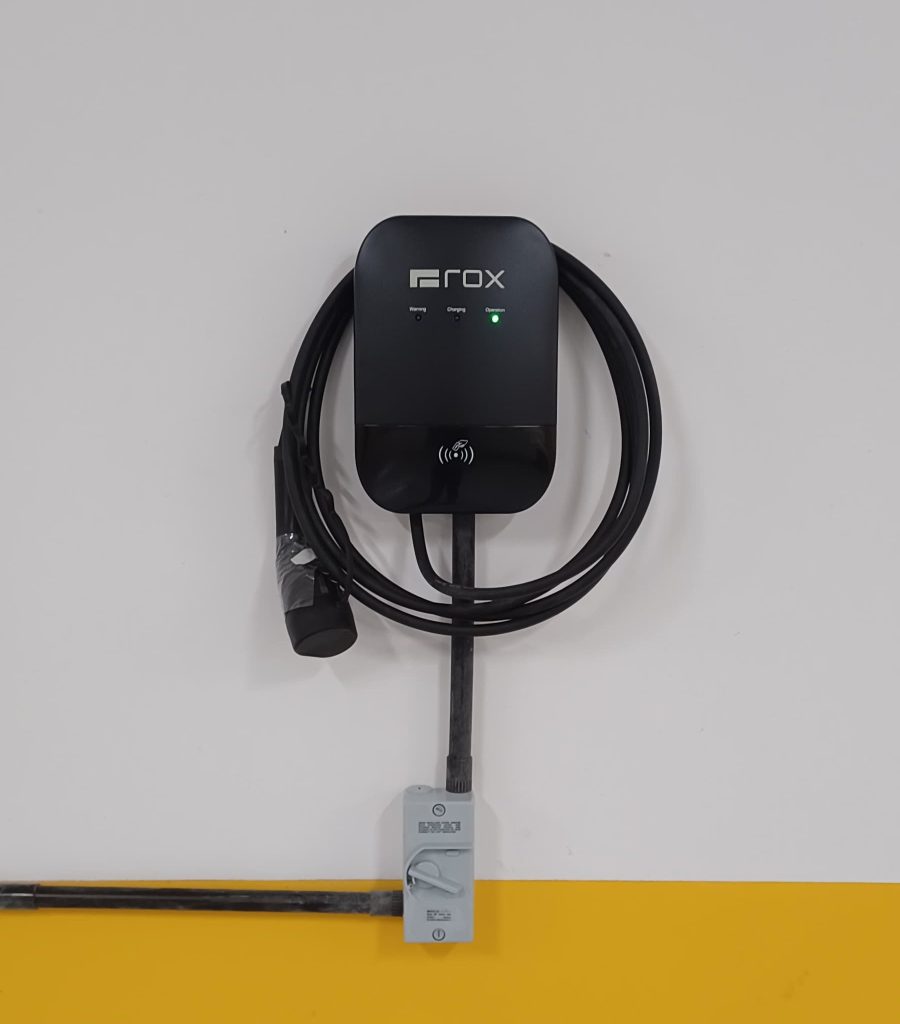
Level 2 Charging (AC – Home or Commercial Units) ⚡
Level 2 charging is the most common and practical solution for everyday EV users who need faster, more reliable charging than a basic household outlet. It requires the installation of a dedicated charging unit, either at home or in public/commercial locations.
- Charging Speed: Level 2 chargers typically deliver 7–22 kW of power, reducing charging time to around 4–8 hours for a full battery. On average, this adds 30–40 kilometers of range per hour of charging, making it suitable for both daily commuting and longer drives.
- Best Use Cases:
- Homes: Convenient overnight charging for families.
- Workplaces: Allows employees to recharge during the day.
- Hotels & Parking Facilities: Adds value for guests and drivers needing mid-journey top-ups.
- Homes: Convenient overnight charging for families.
- Advantages:
- Significantly faster than Level 1 charging.
- Widely supported by most EV models.
- Increasing availability across residential and commercial settings.
- Significantly faster than Level 1 charging.
- Limitations:
- Requires professional installation and higher upfront cost.
- Charging speed still slower compared to DC fast charging, limiting convenience for long highway trips.
- Requires professional installation and higher upfront cost.
✨ In summary, Level 2 charging strikes the perfect balance between speed, convenience, and cost-efficiency. For most EV drivers in Saudi Arabia—whether at home in Riyadh or at a commercial hub in Jeddah—it represents the go-to solution for practical, everyday charging.
DC Fast Charging – Powering EVs at Lightning Speed ⚡
DC Fast Charging represents the quickest and most powerful way to recharge an electric vehicle today. Unlike Level 1 and Level 2 chargers that use alternating current (AC), these stations supply direct current (DC) straight to the battery, bypassing the onboard charger for maximum efficiency.
- Charging Speed: Capable of bringing an EV battery from 0% to 80% in just 30–40 minutes, adding hundreds of kilometers of range in the time it takes for a coffee break ☕.
- Best Use Cases: Perfect for highways, shopping malls, airports, and large public charging hubs, where drivers need rapid top-ups during longer journeys.
- Advantages:
- Enables long-distance travel without long downtime.
- Critical for building driver confidence and reducing range anxiety.
- Supports Saudi Arabia’s Vision 2030 clean mobility goals by making EVs more practical for both city and intercity travel.
- Enables long-distance travel without long downtime.
- Limitations:
- Higher installation and infrastructure costs.
- Not all EV models support the maximum charging speeds.
- Higher installation and infrastructure costs.
✨ In short, DC Fast Charging is the game-changer of EV infrastructure—turning long charging hours into minutes and making electric vehicles a viable choice for every driver in Saudi Arabia and beyond.
Ultra-Fast / Superchargers – The Future of EV Charging
Ultra-Fast Chargers, also known as Superchargers, represent the cutting edge of EV charging technology. Designed for maximum speed and efficiency, they are setting a new benchmark for what electric mobility can achieve.
- Charging Speed: With outputs reaching 150–350 kW or more, these chargers can power an EV battery from 0% to 80% in just 15–20 minutes—almost as quick as a traditional fuel stop.
- Best Use Cases: Ideal for highways, premium shopping centers, airports, and strategic charging hubs, where drivers need ultra-fast turnaround during long trips.
- Advantages:
- Makes EV ownership practical even for long-distance travel, reducing charging stops to mere minutes.
- Enhances driver convenience and further eliminates range anxiety.
- Acts as a critical enabler for mass EV adoption in regions like Saudi Arabia, where large-scale infrastructure projects are rapidly expanding under Vision 2030.
- Makes EV ownership practical even for long-distance travel, reducing charging stops to mere minutes.
- Limitations:
- Requires substantial infrastructure investment and grid capacity.
- Vehicle compatibility varies—not all EVs can take full advantage of ultra-fast speeds.
- Higher charging costs compared to Level 2 or standard fast charging.
- Requires substantial infrastructure investment and grid capacity.
✨ In summary, Ultra-Fast / Superchargers are redefining the EV experience, turning what once took hours into minutes. As Saudi Arabia continues to invest heavily in advanced charging networks, these chargers will become the cornerstone of a modern, sustainable, and driver-friendly mobility ecosystem.
How to Choose the Right EV Charger ⚡🔌
Selecting the right charger for your electric vehicle isn’t just about speed—it’s about finding the perfect match for your car, lifestyle, and budget. Here are the key factors to consider:
1. Vehicle Compatibility
Not all EVs are designed to handle fast or ultra-fast charging. Before investing, check your car’s specifications to ensure it supports higher power outputs. For example, some compact EVs are limited to Level 2 charging, while premium models like Tesla or Lucid can benefit fully from DC Fast or Ultra-Fast chargers.
2. Lifestyle & Driving Habits
- Daily Commuting: If your routine involves short trips within the city, Level 1 or Level 2 chargers at home may be sufficient.
- Long-Distance Travel: Frequent highway driving calls for access to DC Fast or Ultra-Fast chargers, cutting downtime from hours to minutes.
3. Cost & Installation Requirements
- Level 1: Cheapest option, no installation, but slowest (12–24 hours).
- Level 2: Moderate cost, requires professional installation, offers a good balance of speed and convenience.
- DC Fast / Ultra-Fast: Higher upfront and operating costs, but ideal for businesses, public hubs, and heavy travelers who value time savings.
✨ In short, the right charger is the one that fits your EV and your lifestyle. For Saudi drivers, combining home Level 2 charging for daily use with access to DC Fast or Ultra-Fast stations for road trips creates the most efficient and future-proof solution.
The Future of EV Charging in Saudi Arabia 🇸🇦
Saudi Arabia is moving rapidly toward building a world-class EV charging ecosystem, aligned with the ambitions of Vision 2030 to diversify energy resources and promote sustainable mobility. The future of charging in the Kingdom is being shaped by three major pillars:
Nationwide Infrastructure Expansion
The government and private sector are investing heavily in public charging networks, ensuring that highways, urban centers, and residential areas are all equipped with reliable EV chargers. This expansion is designed to eliminate range anxiety and make EVs a practical choice for every Saudi driver.
Renewable Energy Integration
One of the most exciting developments is the integration of solar and other renewable energy sources into charging stations. By linking EV charging with clean energy, the Kingdom not only reduces emissions but also strengthens its position as a leader in sustainable innovation and energy transition.
Smart Charging Networks
Future charging stations will feature AI-powered smart grids, capable of real-time monitoring, predictive energy distribution, and dynamic pricing. This means optimized electricity usage, reduced grid stress, and lower costs for consumers. Drivers will be able to track charging progress, reserve slots, and even benefit from automated load balancing through mobile apps.
✨ In short, the future of EV charging in Saudi Arabia is fast, green, and intelligent. With Vision 2030 as the driving force, the Kingdom is on track to become a regional hub for sustainable transportation, offering drivers not just a cleaner option, but a smarter, more connected mobility experience.
Conclusion
Each type of EV charger serves a different purpose: from slow and affordable home charging to ultra-fast solutions for highways. The growth of charging infrastructure in Saudi Arabia will make EV ownership easier and more practical than ever.
👉 At LoopGate, we deliver customized EV charging solutions for individuals, businesses, and institutions across Saudi Arabia. Contact us today to find the right charging system for your needs